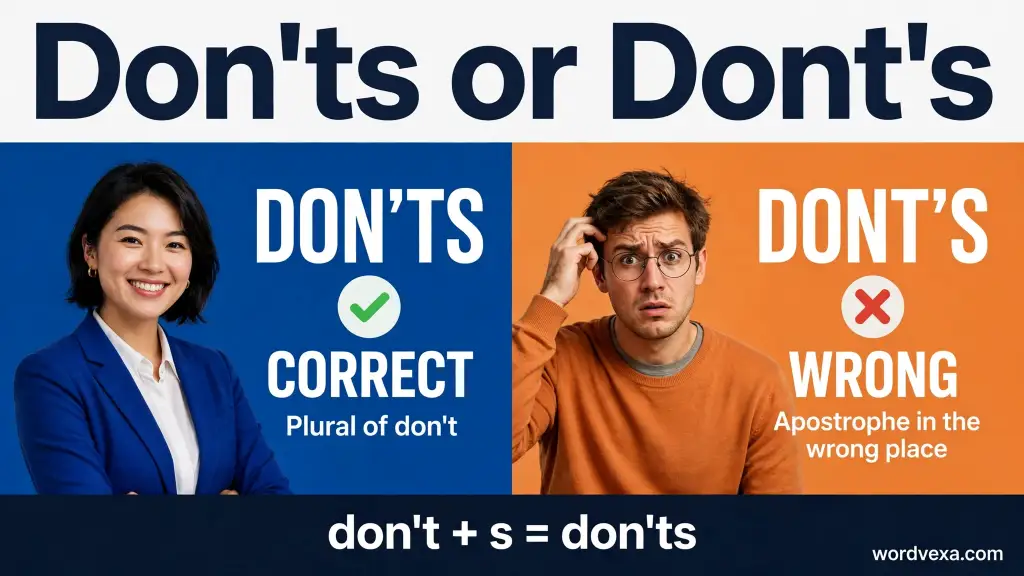
Don’ts or dont’s is a common spelling question, and don’ts is the correct spelling, meaning actions, behaviors, or choices that people should avoid. The word comes from don’t, a contraction of do not, and keeps the apostrophe in its original position.
Many writers confuse these forms because they think an apostrophe is needed to make a word plural. However, apostrophes are not normally used to form plurals in English.
Since don’t already contains an apostrophe, you simply add s at the end to form don’ts. The spelling dont’s is incorrect in standard English.
You will often see don’ts in the expression dos and don’ts, which describes things people should and should not do. It appears in school rules, business guides, travel advice, educational articles, and everyday conversations.
In this guide, you will learn the meaning and origin of don’ts, understand British and American usage, explore common spelling mistakes, and review practical examples to help you use the word correctly in your writing.
Don’ts or Dont’s: The Quick Answer
Don’ts is the correct spelling; dont’s is incorrect in standard English. The word don’t is a contraction of do not. When it becomes a plural noun referring to things people should avoid, the apostrophe stays in its original position and an s is added at the end.
Examples:
- Correct: Learn the dos and don’ts of professional writing.
- Incorrect: Learn the dos and dont’s of professional writing.
- Generally avoided: Learn the dos and don’t’s of professional writing.
Remember: Keep the apostrophe in don’t and add the plural s at the
What Does Don’ts Mean?
Definition of Don’ts
The word don’ts is the plural form of don’t when it is used as a noun. It refers to actions, behaviors, or choices that people should not make.
In simple terms, a don’t is something you should not do, while don’ts refers to more than one such action.
The expression dos and don’ts combines two related ideas:
- Dos: Things people should do.
- Don’ts: Things people should not do.
The expression is commonly used to explain rules, recommendations, and actions to avoid.
How Is Don’ts Used in a Sentence?
The word often appears in lists, instructions, advice, and educational content.
Examples:
- The guide explains the don’ts of online safety.
- New employees must learn the dos and don’ts of the workplace.
- One of the biggest don’ts of academic writing is plagiarism.
- The travel article covers the dos and don’ts of visiting a new country.
In each sentence, don’ts refers to actions or behaviors that should be avoided.
Don’t vs. Don’ts
Although these words are related, they serve different grammatical purposes.
| Word | Meaning | Example |
| Don’t | Contraction of do not | Don’t forget your notebook. |
| Don’ts | Actions that should be avoided | Read the don’ts before using the equipment. |
| Dont’s | Incorrect spelling in standard English | Avoid writing dont’s in your article. |
Important: The apostrophe in don’ts is not a plural marker. It remains because it belongs to the contraction don’t.
The Origin of Don’ts
Where Does the Word Don’t Come From?
The word don’t developed as a contraction of do not. The apostrophe marks the letters omitted when the two words are shortened into one.
Contractions make speech and writing more concise. Today, don’t is common in conversations, emails, informal writing, and many forms of digital communication.
The verb do has much older roots. It comes from Old English dōn, meaning to perform or carry out an action.
How Did Don’ts Become a Plural Noun?
English can turn words into nouns when they refer to actions, ideas, or things. In this case, don’t can refer to an action that someone should avoid.
Adding s creates the plural don’ts. The apostrophe stays in its original position, and the plural ending comes after the t.
The process is straightforward:
- Do not: The original two-word expression.
- Don’t: The contraction of do not.
- Don’ts: The plural noun referring to actions people should avoid.
There is no need to add another apostrophe before the final s.
Why Is the Spelling Confusing?
The confusion comes from the different jobs apostrophes perform in English. An apostrophe can mark omitted letters, as in don’t, or possession, as in the student’s book. It is not normally used simply to make a noun plural.
Because don’ts already contains an apostrophe, some writers mistakenly add another one. Others remove the original apostrophe and write dont’s.
The easiest solution is to remember that the original contraction keeps its punctuation when the plural ending is added.
British English vs. American English
The standard spelling don’ts is used in both British and American English. There is no regional rule that makes dont’s correct in one variety.
However, the related word dos has a variation. Some dictionaries and style guides accept do’s as an alternative to dos, often because it can make the plural easier to read.
| British English | American English | Example |
| Dos and don’ts | Dos and don’ts | Learn the dos and don’ts of travel. |
| Do’s and don’ts may also appear | Do’s and don’ts may also appear | Read the do’s and don’ts before starting. |
| Don’ts | Don’ts | Know the don’ts of safe internet use. |
| Dont’s is not standard | Dont’s is not standard | Avoid the spelling dont’s. |
Modern style guides often favor dos and don’ts because it avoids an unnecessary apostrophe in dos. However, usage can vary by dictionary, publisher, and editorial style.
What Do Style Guides Recommend?
Many modern style guides prefer dos and don’ts because ordinary plurals do not normally require apostrophes.
For example, the Australian Government Style Manual recommends dos and don’ts. Some dictionaries and publications also recognize do’s and don’ts.
The best approach is to follow the dictionary or style guide used by your publication. If no specific guide is required, dos and don’ts is a clear and consistent choice.
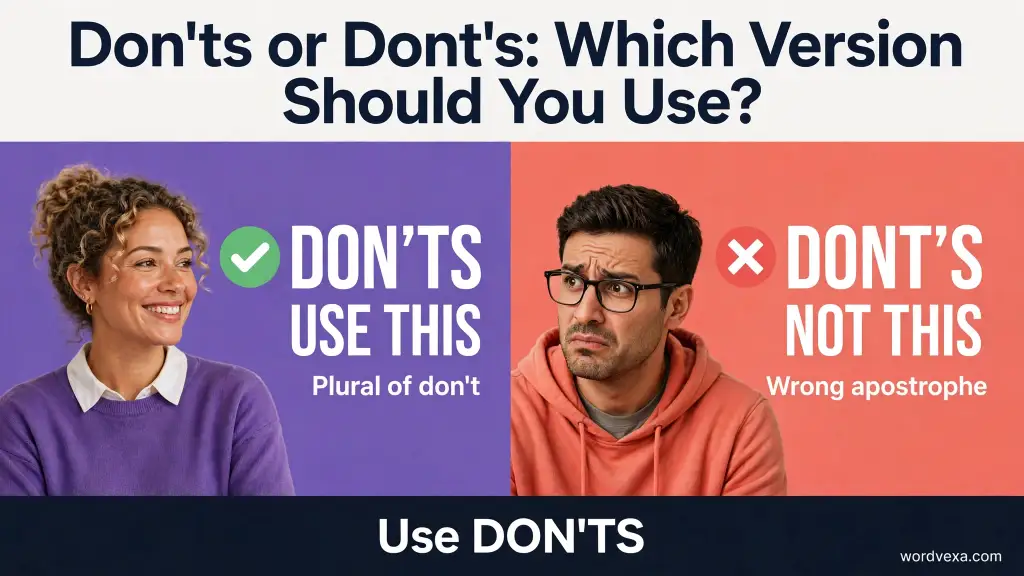
Don’ts or Dont’s: Which Version Should You Use?
For Writers in the United States
Use don’ts in American English. For the complete expression, dos and don’ts is a reliable default.
Example: The editor shared the dos and don’ts of writing a strong headline.
For Writers in the United Kingdom
Use don’ts in British English as well. You may encounter do’s and don’ts, but dos and don’ts follows a common modern editorial preference.
Example: The school published a list of classroom dos and don’ts.
For Canadian Writers
Canadian English draws on both British and American conventions. Both dos and don’ts and do’s and don’ts may appear, depending on the publication.
For formal work, follow the relevant organization’s style guide and keep your spelling consistent.
For Australian Writers
The Australian Government Style Manual recommends dos and don’ts. This is a useful choice for government, educational, and professional content.
For International Writing
If your article is intended for readers worldwide, use dos and don’ts. It is concise, recognizable, and suitable for a broad audience.
Avoid dont’s, which may look like a spelling error to readers familiar with standard English.
For Academic Writing
In academic work, follow your institution’s or publisher’s style requirements. Use don’ts when the word fits the context, but consider more formal alternatives such as prohibited actions, practices to avoid, or restrictions.
Example: The research guidelines list practices that participants should avoid.
For Business Writing
Use dos and don’ts in employee handbooks, training guides, presentations, and practical checklists.
Example: The onboarding document covers the dos and don’ts of communicating with clients.
For a highly formal policy, headings such as Required Practices and Prohibited Actions may sound more precise.
Common Mistakes with Don’ts or Dont’s
Writers often make the same punctuation mistakes. Understanding why they occur makes them easier to correct.
Mistake 1: Writing Dont’s
Incorrect: Dont’s
Correct: Don’ts
The incorrect version removes the apostrophe that represents the omitted letters in do not. The correct spelling preserves the original contraction.
Memory tip: Start with don’t, then add s. Do not move or remove the original apostrophe.
Mistake 2: Writing Don’t’s
Generally avoided: Don’t’s
Correct: Don’ts
This form adds a second apostrophe before the plural ending. Standard modern spelling does not need that extra mark.
Memory tip: One contraction, one apostrophe. Keep the apostrophe in don’t and add s at the end.
Mistake 3: Writing Do’s and Dont’s
Incorrect: Do’s and Dont’s
Preferred: Dos and Don’ts
The first form adds an apostrophe to do under a plural rule that usually does not require one, while the second removes the apostrophe from don’t. Some style guides accept do’s, but dont’s remains incorrect.
Memory tip: Remember the standard pair as dos and don’ts.
Mistake 4: Using an Apostrophe for Every Plural
An apostrophe usually does not make an ordinary noun plural.
Incorrect: The office has many rule’s.
Correct: The office has many rules.
Similarly, write don’ts, not don’t’s, when following standard plural conventions.
Mistake 5: Confusing Don’t with Don’ts
The two forms do not always serve the same grammatical role.
- Don’t: Don’t open the door.
- Don’ts: The safety guide lists the don’ts.
In the first sentence, don’t tells someone not to act. In the second, don’ts is a noun referring to prohibited actions.
Everyday Examples of Don’ts
The word don’ts works in many types of writing. Here are practical examples you can adapt to real situations.
In Emails
- Please review the dos and don’ts before sending your first client email.
- Here are three don’ts to remember when replying to customer complaints.
- One important don’t is sharing confidential information with unauthorized people.
Business Writing
- The training guide explains the dos and don’ts of workplace communication.
- Employees should understand the don’ts of handling customer data.
- One of the main don’ts during a meeting is interrupting other speakers.
In News Headlines
- The Dos and Don’ts of Staying Safe During a Heatwave
- Travel Dos and Don’ts Every Visitor Should Know
- Experts Share the Don’ts of Online Shopping
These examples use the word to introduce advice or highlight behaviors readers should avoid.
In Blogs
- Discover the dos and don’ts of writing an effective blog post.
- Learn the common don’ts of search engine optimization.
- One of the biggest don’ts is publishing content without checking its accuracy.
On Social Media
- Wedding guest dos and don’ts for a stress-free celebration.
- Fitness don’ts that beginners should avoid.
- The dos and don’ts of creating a professional LinkedIn profile.
In Academic Writing
- The guide outlines the dos and don’ts of responsible research.
- Students should learn the don’ts of plagiarism and improper citation.
- One important don’t is presenting another person’s ideas as your own.
For more formal academic writing, phrases such as prohibited practices may be preferable.
In Daily Conversation
- What are the dos and don’ts of visiting your friend’s family?
- I know the basic don’ts, but what should I do first?
- The instructor explained the don’ts before the activity began.
In each example, the word refers to an action or behavior that should be avoided.
Google Trends and Modern Usage
Why Do People Search for Don’ts or Dont’s?
The search phrase don’ts or dont’s reflects a common spelling question. People often know how to use the word when speaking but are unsure where the apostrophe belongs when writing it.
Several factors explain the confusion:
- Contractions: Writers may forget that don’t already contains an apostrophe.
- Plural forms: Some people incorrectly assume every plural ending needs an apostrophe.
- Search habits: Readers may type an incorrect spelling into a search engine to check it.
- Editorial differences: The alternative spelling do’s can make the apostrophe rule seem inconsistent.
Is Don’ts Common in Modern English?
Yes. The word appears in advice articles, instructional content, school guidelines, business documents, and everyday writing.
The phrase dos and don’ts is especially useful when a writer needs to present positive recommendations alongside actions to avoid.
Which Spelling Is More Popular on Google?
A precise regional ranking or search-volume comparison requires current Google Trends or keyword-planning data. Without verified data, it would be misleading to claim that one spelling receives a particular percentage of searches.
For writing purposes, search popularity is not the deciding factor. Use don’ts, even if a search query contains the incorrect spelling dont’s.
Quick Comparison Table
| Version | Meaning | Correct? | Region | Example |
| Don’ts | Actions to avoid | Yes | British, American, and international English | Learn the don’ts of safe driving. |
| Dont’s | Intended to mean actions to avoid | No | Not standard | Avoid writing dont’s. |
| Don’t’s | Intended as the plural of don’t | Generally avoided | Standard modern editorial writing | Write don’ts instead. |
| Dos | Actions to perform | Yes | Widely used | Review the dos before starting. |
| Do’s | Alternative plural spelling of do | Accepted by some guides | Varies by style guide | Read the do’s and don’ts. |
Key Takeaways
- Don’ts is the correct spelling, not dont’s.
- Don’t is a contraction of do not.
- The apostrophe in don’ts marks omitted letters, not the plural.
- Use don’ts for actions or behaviors that should be avoided.
- Dos and don’ts is a widely recommended form of the complete expression.
- Some dictionaries and publications also accept do’s and don’ts.
- British and American English both use don’ts.
- Follow your publication’s style guide when choosing between dos and do’s.
FAQs About Don’ts or Dont’s
Q1. Is it don’ts or dont’s?
Don’ts is the correct spelling in standard English. It is the plural noun formed from don’t, which means do not. The apostrophe stays between the n and t, and the plural s is added at the end. The spelling dont’s incorrectly removes the original apostrophe and places one before the plural ending.
Q2. Why does don’ts have an apostrophe?
The apostrophe in don’ts shows that letters have been omitted from do not. The apostrophe is part of the original contraction, not a marker of the plural. When don’t becomes a plural noun, the apostrophe stays where it is, and an s is added to the end.
Q3. Is don’t’s ever correct?
In standard modern writing, don’ts is the preferred plural spelling. Don’t’s adds an unnecessary second apostrophe and is generally avoided by contemporary style guides. If you are writing a school assignment, business document, or online article, use don’ts unless a specific editorial authority instructs you otherwise.
Q4. Is dont’s a real word?
Dont’s may appear in informal writing or as a typing error, but it is not the standard spelling of the plural noun. The correct form is don’ts. If you are editing an article, proofreading a school assignment, or preparing professional content, correct dont’s to don’ts.
Q5. What is the plural of don’t?
The plural is don’ts when the word is used as a noun to mean actions people should not take. For example, The guide lists several don’ts for new employees. The apostrophe remains because it belongs to the contraction don’t. Do not add another apostrophe before the final s.
Q6. Is it dos and don’ts or do’s and don’ts?
Both forms are used, and some dictionaries accept both. However, dos and don’ts is a clear choice that follows the general rule against using apostrophes to form ordinary plurals. Follow your chosen dictionary or publication style guide, especially in formal and academic writing.
Q7. Do British and American English spell don’ts differently?
No. Both British and American English use don’ts. The main variation concerns the other half of the expression: dos versus do’s. Some publications prefer dos, while others use do’s for readability. The spelling dont’s is not the standard form in either variety.
Q8. What does dos and don’ts mean?
The expression dos and don’ts means the actions people should and should not take in a given situation. Dos are recommended actions, while don’ts are actions to avoid. For example, a workplace guide might explain the dos and don’ts of professional communication to help employees behave appropriately.
Conclusion
The spelling choice between don’ts or dont’s is simple once you understand how contractions work. Don’ts is correct, while dont’s is a nonstandard spelling. The apostrophe in don’ts represents the omitted letters in do not, and the final s makes the noun plural.
The word is useful when discussing rules, advice, and behaviors people should avoid. You will often find it in the expression dos and don’ts, which provides a clear way to explain both recommended and discouraged actions.
For most articles, school assignments, business guides, and general writing, dos and don’ts is a reliable choice. Some dictionaries and publications accept do’s and don’ts, so check the relevant style guide if consistency is important. However, there is no need to add an extra apostrophe to don’ts.
The next time you write a checklist, an instructional guide, or an article about common mistakes, remember this simple rule: Keep the apostrophe in don’t, then add s to form don’ts.
Explore more English grammar and spelling guides on Wordvexa.com to make your writing clearer and more accurate.
Explore More Articles:
- Attach or Attatch: How to Spell It Correctly
- Agast or Aghast: Which Spelling Is Correct?
- Enflamed or Inflamed: Meaning, Difference, and Examples

I’m Sloane Mercer, a U.S.-based English language writer focused on grammar, spelling, vocabulary, and everyday English usage. Through Wordvexa, I provide clear and practical explanations to help readers choose the right words and communicate with confidence.




2 thoughts on “Don’ts or Dont’s: Correct Usage and Apostrophe Rules”