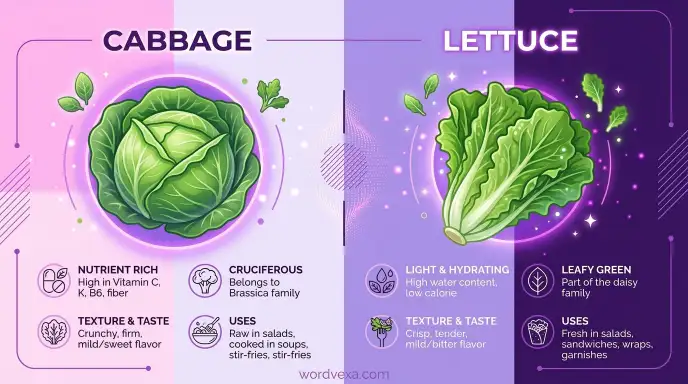
Cabbage or lettuce refers to two distinct leafy vegetables that are often confused due to their similar green, head-like appearance, but belong to completely different botanical families and serve different culinary purposes.
While both are kitchen staples, they vary greatly in texture, taste, nutrition, and cooking applications.
People frequently search for cabbage or lettuce because varieties like green cabbage and iceberg lettuce look almost identical on grocery store shelves.
This guide clears up all confusion so you can select the perfect leafy green for salads, warm meals, or long-term meal prep.
Cabbage or Lettuce: Quick Answer
Cabbage is a dense, crunchy vegetable from the brassica family that holds up well in cooked dishes like soups and stir-fries. Lettuce is a softer, water-rich leafy green from the daisy family that is usually eaten raw in salads and sandwiches.
- Cabbage Example: Coleslaw, fermented sauerkraut, and vegetable stir-fries.
- Lettuce Example: Caesar salad, burger toppings, and fresh wraps.
Botanical Classification and Plant Families
- Cabbage: Belongs to the Brassicaceae family (cruciferous vegetables), making it a close relative of broccoli, kale, and cauliflower.
- Lettuce: Belongs to the Asteraceae family (daisy family), making it related to sunflowers and dandelions.
Definition and Meaning of Cabbage or Lettuce
Clear Definition
Cabbage (Brassica oleracea) is a cruciferous vegetable with tightly packed, thick leaves. Lettuce (Lactuca sativa) is an annual leafy plant grown primarily for its tender leaves.
Simple Meaning
Think of cabbage as a sturdy, hearty vegetable built for cooking or heavy crunch. Think of lettuce as a fresh, light green designed for quick raw eating.
Context and Usage
Use cabbage when you need a vegetable that lasts weeks in the fridge and stays firm during cooking. Use lettuce when you want a light, delicate crunch for quick meals.
Different Types and Meanings
- Cabbage Types: Green, red, Savoy, and Napa (Chinese) cabbage.
- Lettuce Types: Iceberg, Romaine, butterhead, and loose-leaf lettuce.
The Origin of Cabbage or Lettuce
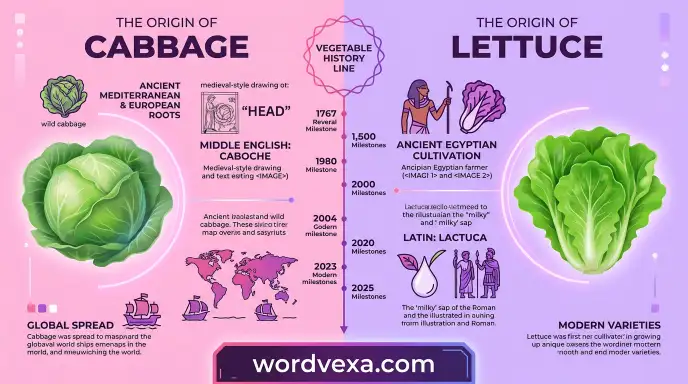
The word cabbage comes from the Middle English word caboche, meaning “head.” It was domesticated in Europe thousands of years ago from wild sea cabbage.
The word lettuce stems from the Latin lactuca, which comes from lac (the word for milk), referring to the milky white sap inside the stems. Ancient Egyptians were the first to cultivate lettuce from a wild weed to harvest its seeds for oil, eventually breeding it for its tender edible leaves.
British English vs American English Spelling
There are no spelling differences between British and American English for cabbage or lettuce. Both regions use the exact same spelling. However, word choice for specific varieties can differ.
| Variety | American English | British English / Commonwealth |
| Cruciferous Head | Green Cabbage | Cabbage |
| Crisp Head Lettuce | Iceberg Lettuce | Iceberg Lettuce / Webbs |
| Elongated Salad Green | Romaine Lettuce | Cos Lettuce |
| Chinese Cabbage | Napa Cabbage | Chinese Leaf / Hakusai |
Which Variety Should You Use?
Choosing between cabbage and lettuce depends on your cooking style, storage needs, and personal health goals:
- Choose Cabbage if: You are meal-prepping for the week, making warm soups, fermenting food, or looking for high vitamin C and fiber.
- Choose Lettuce if: You are making a fresh daily salad, topping a sandwich or burger, or want a light, low-calorie base with a mild taste.
- Global Kitchen Tip: Napa cabbage works as a bridge between both worlds—it is tender enough for salads yet sturdy enough for kimchi and hot pots.
Diet and Health Performance
- For Weight Loss: Lettuce has fewer calories per serving, but cabbage keeps you fuller for longer due to its higher dietary fiber content.
- For Gut Health: Cabbage contains glucosinolates and sulfur compounds that support gut health and digestion, especially when fermented into sauerkraut or kimchi.
- For Hydration: Lettuce consists of about 95% water, making it a great hydrating addition to summer meals.
Common Mistakes with Cabbage or Lettuce
- Mistake: Using lettuce in warm soups or stir-fries.
- Correction: Lettuce turns slimy when cooked. Use sturdy cabbage for warm meals instead.
- Mistake: Expecting cabbage to taste mild like iceberg lettuce.
- Correction: Cabbage has a slightly peppery or earthy flavor when raw. Shred it finely and dress it early to soften the bite.
- Mistake: Storing both the exact same way
- Correction: Whole cabbage heads last up to two months in cold storage, whereas delicate lettuce heads spoil within a week or two.
Cabbage or Lettuce in Everyday Examples
- Business & Food Service Email: “Please update our weekly shipment order to include 50 heads of Romaine lettuce for salads and 20 heads of green cabbage for the slaw prep.”
- News Headline: “Rising Produce Costs: How Local Farmers Are Balancing Cabbage and Lettuce Crops This Season.”
- Social Media Post: “Craving a good crunch today! Are you team cabbage for that extra bite, or team lettuce for a light lunch?”
- Formal Cookbook Writing: “Substitute shredded Savoy cabbage for Romaine lettuce only when preparing dishes that involve light sautéing or hot broths.”
Cabbage or Lettuce: Google Trends & Usage Data
Search trends show high regional spikes for cabbage during winter months, holiday seasons, and around St. Patrick’s Day (famous for corned beef and cabbage). Cabbage searches also peak globally in regions with heavy fermentation traditions, such as Eastern Europe (sauerkraut) and Korea (kimchi).
Search volume for lettuce remains steady year-round across the US, UK, and Australia, peaking during spring and summer months when consumers shift toward raw salads and outdoor barbecues.
Direct Comparison: Cabbage vs Lettuce
| Feature | Cabbage | Lettuce |
| Plant Family | Brassicaceae (Cruciferous) | Asteraceae (Daisy) |
| Texture | Firm, thick, very crunchy | Soft, crisp, delicate |
| Best Used | Cooked, fermented, or shredded in slaws | Raw in salads, tacos, and sandwiches |
| Vitamin C Content | High (~36 mg per 100g) | Moderate (~9 mg per 100g) |
| Vitamin A Content | Low (~5 mcg per 100g) | High (~436 mcg per 100g in Romaine) |
| Water Content | ~92% | ~95% |
| Shelf Life | Several weeks to months | 1 to 2 weeks maximum |
Frequently Asked Questions
Q1. Is cabbage healthier than lettuce?
Cabbage generally contains higher levels of vitamin C, fiber, and beneficial sulfur compounds. However, dark green lettuces like Romaine provide higher amounts of vitamin A and folate.
Q2. Can I replace lettuce with cabbage in a salad?
Yes, but shred the cabbage very finely. Cabbage is much denser than lettuce, so thick cuts can be tough to chew raw.
Q3. Why does cabbage last longer than lettuce?
Cabbage leaves have lower water content and thicker cell walls, making them far more resistant to spoilage and moisture loss.
Q4. Is red cabbage just colored lettuce?
No. Red cabbage is a true cabbage rich in anthocyanins (antioxidants), giving it a deep purple-red color and a peppery crunch.
Q5. Is Romaine lettuce related to cabbage?
No. Romaine is a true lettuce species from the daisy family, even though its tall head looks slightly like Napa cabbage.
Conclusion
Understanding the differences between cabbage and lettuce helps you make better choices in the grocery aisle and the kitchen.
While green cabbage and iceberg lettuce look similar on the outside, their flavors, textures, and nutritional benefits are distinct. Cabbage offers a dense, fiber-rich crunch that thrives in hot dishes, stir-fries, and long-term storage.
Lettuce provides a light, hydrating crispness perfect for fresh salads, burgers, and wraps. Keep cabbage on hand for heartier meals and fermented dishes, and pick up fresh lettuce for quick, raw lunches. Both greens play a valuable role in a balanced diet.
Explore More Articles:
- Aides or Aids: How to Use Each Word Correctly
- Catholic or Christian: What Is the Difference?
- Patience or Patient: What’s the Difference?

I’m Claire Morgan, the author behind wordvexa.com, where I write about English grammar, sentence structure, punctuation, and everyday language. My goal is to make grammar simple, clear, and practical, helping readers understand the rules and apply them with confidence in real-world writing.








2 thoughts on “Cabbage or Lettuce: Key Differences, and Culinary Uses”